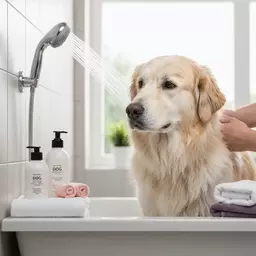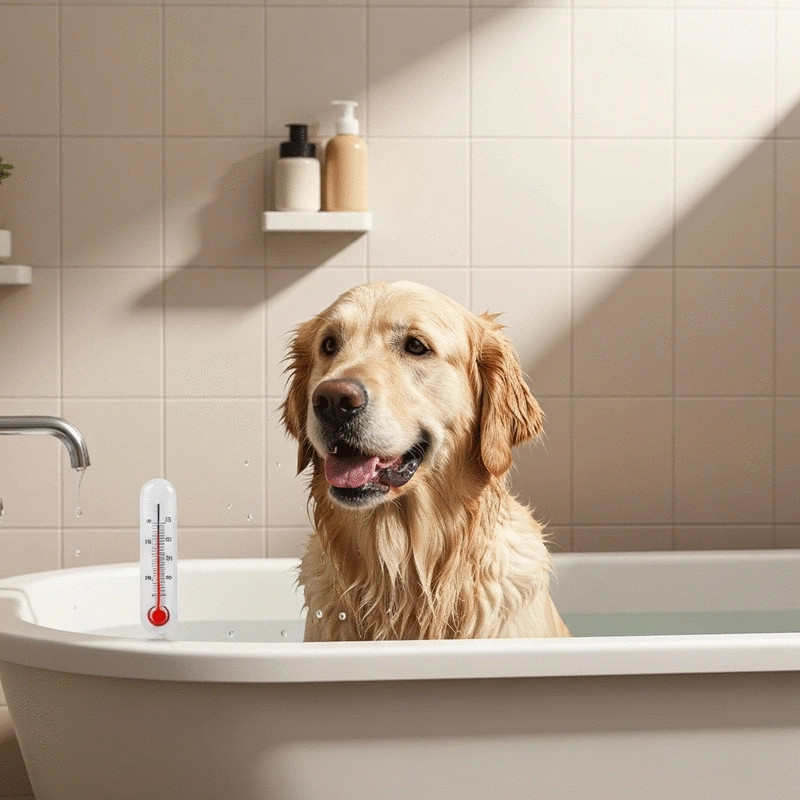

Did you know that the right water temperature can significantly enhance your dog's grooming experience? By prioritizing their comfort, you can turn bath time into a delightful ritual instead of a stressful chore.
What You Will Learn
- Maintaining a water temperature between 95-105°F is crucial for your dog's comfort and skin health.
- Cold water can cause shivering and anxiety, while hot water can strip essential oils from your dog's skin.
- Using filtered water can improve bathing quality by reducing skin irritants from chlorine and hard minerals.
- Regularly checking your dog's reactions during bath time helps you adjust practices for a more positive experience.
Optimizing Dog Bath Water Temperature for Comfort and Health
The ideal water temperature and quality are crucial for a positive and healthy dog bathing experience. The visual below highlights the recommended temperature range and key considerations for water quality, as well as the physiological effects of incorrect temperatures.
Ideal Water Temperature Range
95-105°F
Ensures comfort and prevents skin irritation.
Water Quality Matters
- Chlorine & Chemicals: Can irritate skin.
- Hard Water: Leaves residues.
- Filtration: Enhances bathing experience.
Physiological Effects of Incorrect Temperatures
Cold Water: Shivering, stress, anxiety.
Hot Water: Strips oils, dryness, irritation.
Understanding the Importance of Dog Bath Water Temperature
When it comes to grooming your dog, one critical factor that often gets overlooked is the water temperature during bath time. It's not just about getting them clean; the comfort of your furry friend plays a vital role in their overall skin health and grooming experience. Too hot or too cold water can lead to discomfort and even skin issues, which is why understanding water temperature is essential for every dog owner.
At The Dog Bath Authority, we emphasize that maintaining an appropriate water temperature can turn bath time into a positive experience rather than a dreaded chore. After all, happy dogs lead to happy owners, right?
Why Water Temperature Matters for Dogs
Proper water temperature is crucial for several reasons:
- Comfort: Dogs are sensitive to extreme temperatures just like we are. A comfortable bath can prevent anxiety and stress.
- Skin Health: Water that is too hot can strip away natural oils, leading to dryness and irritation. Conversely, cold water can cause shivering and discomfort. Research published in the National Library of Medicine highlights the importance of appropriate bathing practices for canine skin health.
- Effective Grooming: Comfortable dogs are more likely to relax, allowing for a thorough cleaning and proper grooming.
As you prepare for your dog's bath, remember that their comfort should always be a priority. This simple adjustment can make a significant difference in your dog's bathing experience!
Ideal Water Temperature Range for Dogs
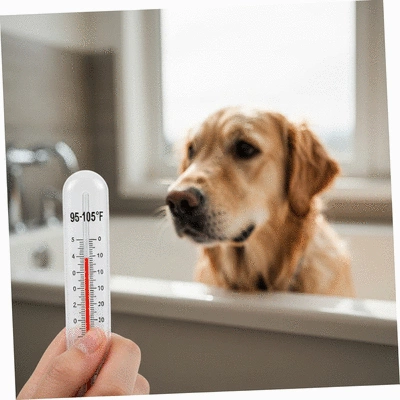
The recommended water temperature for bathing dogs typically falls within the 95-105°F range. Why is this range important? It’s warm enough to ensure a soothing experience without causing discomfort.
To measure the water temperature accurately, consider using a thermometer designed for aquariums or cooking. Simply dip it into the water and adjust accordingly. This small step can save your pup from an unpleasant experience!
The Role of Water Quality in Bathing
Water quality is just as important as temperature. Poor water quality can exacerbate skin conditions and affect the overall effectiveness of your dog's bath. Here are some aspects to consider:
- Chlorine and Chemicals: Tap water often contains chlorine and other chemicals that can irritate your dog’s skin.
- Hard Water: High mineral content can leave residues on your dog’s coat, potentially leading to skin issues over time.
- Filtration: Using filtered water can enhance the bathing experience, ensuring it’s gentle on your dog’s skin and coat. The National Library of Medicine offers further insights into the impact of environmental factors on canine dermatological health.
By being mindful of water quality, you contribute to your dog's overall health and comfort during their grooming routine. It’s these little details that can make a big difference!
The Physiological Effects of Water Temperature on Dogs
How Cold Water Affects Your Dog's Comfort
Cold water can lead to an uncomfortable bathing experience for your dog. Physiologically, cold temperatures can cause shivering, which not only makes them feel uneasy but can also tighten their muscles. This reaction can lead to stress and anxiety, making bath time a struggle for both of you.
To avoid this discomfort, always test the water before bringing your pup in. It’s all about creating a relaxing environment that makes grooming feel like a treat rather than a chore!
The Impact of Hot Water on Dog Skin and Coat
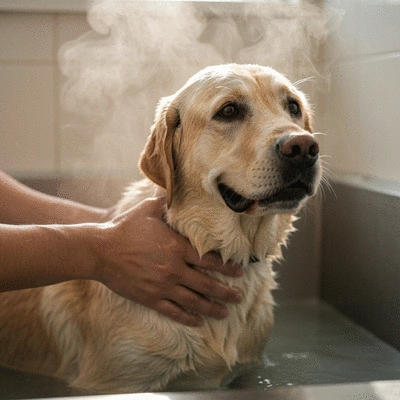
On the flip side, hot water can be harmful to your dog’s skin and coat. It can strip essential oils, leading to dryness, irritation, and even itchiness. Over time, this can cause serious skin issues that are both uncomfortable and costly to treat. Research from SRUC (Scotland's Rural College) also emphasizes the importance of cooling for dogs, which extends to avoiding excessively hot water during baths.
So, the next time you fill the tub, remember that keeping the water at a comfortable, lukewarm temperature is key to maintaining your dog's skin health and overall well-being.
Frequently Asked Questions About Dog Bathing Temperature
Q: What is the ideal water temperature for bathing a dog?
A: The ideal water temperature for bathing dogs is between 95-105°F (35-40.5°C). This range is warm enough to provide comfort without causing discomfort or stripping natural oils from their skin.
Q: Why is water temperature so important for dog baths?
A: Correct water temperature ensures your dog's comfort, preventing anxiety and stress. It also protects their skin health; water that's too hot can cause dryness and irritation, while water that's too cold can lead to shivering and discomfort.
Q: How can I accurately measure the water temperature for my dog's bath?
A: You can use a thermometer designed for aquariums or cooking to accurately measure the water temperature. Dip it into the water and adjust as needed to stay within the 95-105°F range.
Q: Does water quality affect my dog's bath?
A: Yes, water quality is important. Chlorine and other chemicals in tap water can irritate your dog's skin, and hard water can leave residues. Using filtered water can enhance the bathing experience and be gentler on their skin and coat.
Q: What are the risks of using water that is too hot or too cold?
A: Too cold water can cause shivering, stress, and anxiety. Too hot water can strip essential oils from your dog's skin, leading to dryness, irritation, itchiness, and potentially serious skin issues.
We Want to Hear From You!
What do you think about the importance of water temperature for your dog's bathing routine? Share your thoughts or experiences below:
Summarizing the Key Takeaways for Dog Bathing Health
As we wrap up our discussion on dog bathing, it's essential to remember the significant impact that appropriate water temperature has on your furry friend's health and comfort. By ensuring that the water is within the ideal range of 95-105°F, we can promote a more enjoyable bath time experience that supports effective grooming and skin health.
In summary, here are the key points to keep in mind:
- Proper water temperature can prevent discomfort and enhance your dog's bathing experience.
- Maintaining a consistent bathing routine with the right temperature fosters optimal coat health.
- Understanding your dog’s specific needs based on breed and coat type is crucial for effective grooming.
By being mindful of these elements, we can work towards creating a positive environment for our pets and ensuring they feel clean and loved after their baths!
Encouraging Responsible Dog Care Practices
At The Dog Bath Authority, we believe that taking the time to implement these discussed practices can make a world of difference in your dog’s bathing experience. Monitoring your pet’s reactions during bath time is vital; if they seem uncomfortable or anxious due to water temperature, it's time to adjust your methods. A simple change can lead to a more relaxed and enjoyable routine for both you and your dog.
Here are some practical steps to encourage responsible dog care:
- Always check the water temperature before the bath starts.
- Use high-quality shampoos designed for your dog's specific needs.
- Keep an eye on your dog's body language during baths to gauge comfort levels.
By incorporating these steps and fostering an attentive approach to your dog's bath time, you’re setting the stage for a healthy grooming routine that benefits their overall well-being.
Final Thoughts on Dog Bathing Temperature
As we finalize our exploration of dog bathing practices, it's crucial to remind ourselves of the value in ongoing education and professional consultation. Don't hesitate to reach out to your veterinarian for tailored advice regarding dog bathing temperatures and techniques. Staying informed will only enhance your ability to provide the best care possible for your beloved pet!
Remember, each dog is unique, and taking the time to understand their needs—especially concerning water temperature—can lead to happier, healthier bathing sessions. Your furry friend deserves it!
Recap of Key Points
Here is a quick recap of the important points discussed in the article:
- Maintain a water temperature between 95-105°F for optimal comfort during dog bathing.
- Ensure water quality is high; consider using filtered water to avoid skin irritations from chlorine and hard minerals.
- Monitor your dog’s comfort levels during bath time and adjust water temperature as needed to reduce anxiety and stress.
- Use high-quality shampoos suited for your dog's specific coat type to promote skin health.
- Establish a consistent bathing routine to help maintain your dog's coat and skin health.