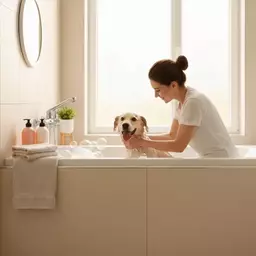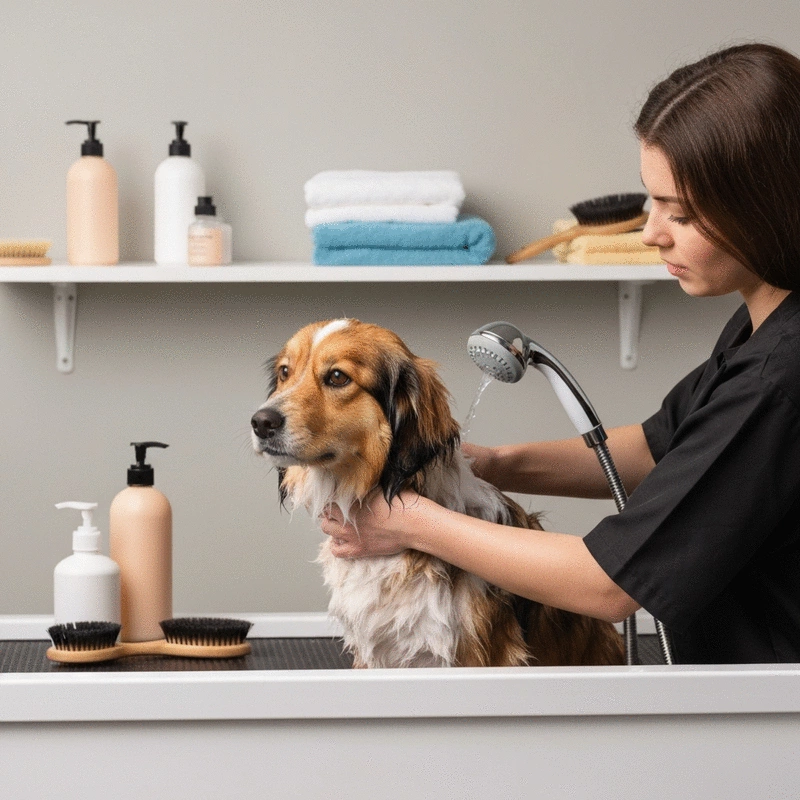

Understanding your dog's coat type is not just a grooming detail—it's a gateway to their overall health and happiness. Tailoring your dog's bathing routine based on their specific coat needs can lead to a shinier coat and a happier pup!
What You Will Learn
- Different dog coat types include smooth, double, wire, and curly, each with unique grooming requirements.
- Bathing frequency varies: smooth coats need less frequent baths compared to double-coated dogs.
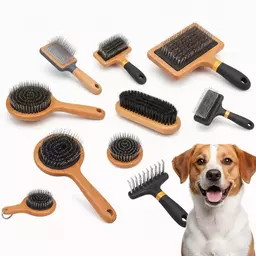
- Regular brushing helps maintain your dog's coat health by reducing shedding and preventing mats.
- Creating a calming bathing environment and using positive reinforcement can make bath time enjoyable for your dog.
Understanding Dog Coat Types and Their Bathing Needs
Different dog coat types have unique bathing needs. This visual categorizes common coat types and highlights their specific care requirements, influencing bathing frequency, techniques, and product choices.
Coat Type 1
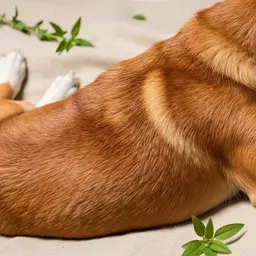
Smooth Coats
**Characteristics:** Short, close to the skin.
**Bathing Needs:** Less frequent (every 4-6 weeks), minimal product use.
Coat Type 2
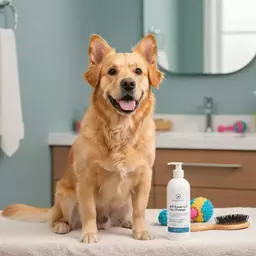
Double Coats
**Characteristics:** Soft undercoat, coarse outer coat; sheds significantly.
**Bathing Needs:** More frequent grooming, attention to undercoat, deshedding products.
Coat Type 3
Wire Coats
**Characteristics:** Rough texture.
**Bathing Needs:** Special handling, hand-stripping, texture-enhancing products.
Coat Type 4
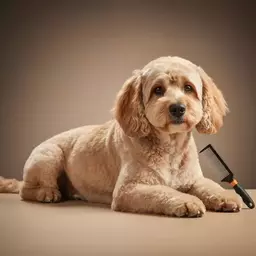
Curly Coats
**Characteristics:** Traps dirt and moisture; prone to matting.
**Bathing Needs:** Careful washing, moisturizing shampoos, regular brushing.
Understanding Dog Coat Types and Their Bathing Needs
When it comes to your dog's grooming routine, understanding their coat type is crucial! There are several classifications of dog coats, and each type has unique bathing needs. The main categories include smooth, double, wire, and curly coats. Knowing these distinctions helps you tailor your bathing techniques to ensure your pup's coat stays healthy and vibrant. For a comprehensive guide on grooming and coat care for your dog, it's helpful to consult veterinary resources.
For instance, smoother coats often require less maintenance, while double-coated breeds might need more attention to their undercoats. It's fascinating how the diversity of dog coats influences grooming practices, and I love sharing this knowledge with fellow dog owners!
Identifying Different Dog Coat Types
Let's dive deeper into the different types of dog coats:
- Smooth Coats: These coats are short and close to the skin, often requiring less frequent bathing.
- Double Coats: Characterized by a soft undercoat and a coarser outer coat, these dogs shed significantly and need regular grooming.
- Wire Coats: Featuring a rough texture, these coats often require special handling to maintain their shape and prevent matting.
- Curly Coats: These coats tend to trap dirt and moisture, necessitating more careful washing techniques.
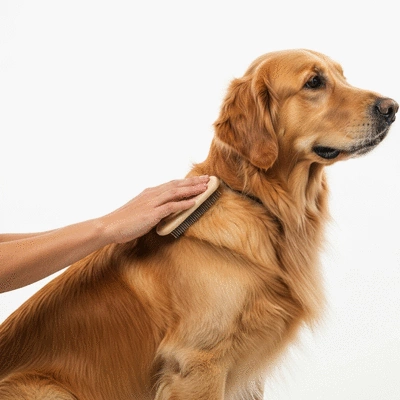
Understanding these classifications can help you choose the right tools and techniques to keep your furry friend looking their best!
Why Coat Type Matters in Bathing
Different coat types impact bathing frequency, techniques, and the products you should use. For example, smooth-coated dogs generally do well with baths every 4-6 weeks, while double-coated breeds might require more frequent grooming to manage shedding and maintain coat health. The Animal Hospital of Clemmons provides further insights into grooming different coat types.
Using specific products tailored to each coat type is also essential. For instance, curly-coated dogs benefit from moisturizing shampoos that help prevent dryness, while wire-coated breeds might do best with products that enhance their texture. Knowing these details ensures you provide the best care for your dog!
Exploring Fur Types and Their Unique Care Needs
Every dog's coat type tells a story about their grooming needs. Here are a few key characteristics:
- Smooth Coats: Require minimal grooming; a good brush now and then keeps them sleek.
- Double Coats: Need regular brushing to remove dead hair and reduce shedding.
- Wire Coats: Benefit from hand-stripping techniques to maintain their unique texture.
- Curly Coats: Should be brushed often to prevent matting and tangles.
Each coat type presents its own challenges and rewards, making it essential to adjust your grooming approach accordingly. By understanding these differences, you're on your way to becoming a proactive pet owner—one who truly cares about their dog's health and happiness!
Tailoring Bathing Techniques to Each Coat Type
Now that we’ve covered the basics of dog coat types, let’s explore how to tailor your bathing techniques. It's essential to adapt your approach based on the specific needs of your dog's coat to promote their overall well-being.
Pro Tip
Did you know that the type of shampoo you use can significantly affect your dog's coat health? For smooth-coated dogs, opt for a mild, moisturizing shampoo to maintain natural oils. For double and curly coats, look for products specifically designed to enhance texture and prevent dryness. Always remember to rinse thoroughly to avoid any residue that can irritate your dog's skin!
Maintaining Your Dog's Coat Between Baths
Keeping your dog's coat healthy between baths is essential for their overall well-being. Regular maintenance helps reduce the frequency of baths, allowing you to provide better care for your furry friend. By incorporating a brushing routine and being attuned to your dog's skin and coat needs, you can help maintain a clean and vibrant coat. So, let's dive into how we can achieve this together!
Regular Brushing and Maintenance Routines
One of the best ways to keep your dog's coat in top condition is through regular brushing. Not only does this remove loose hair and debris, but it also helps distribute natural oils throughout their coat. Here are some key benefits of a good brushing routine:
- Reduces mats and tangles: Regular brushing prevents knots from forming, especially in longer coats.
- Encourages a healthy coat: It promotes shine and maintains the coat's softness.
- Minimizes shedding: Frequent brushing can help manage shedding, keeping your home cleaner.
I recommend brushing your dog at least once a week, or more frequently for certain breeds. For example, long-haired dogs may require daily attention, while short-haired breeds might be fine with a weekly routine. Remember, brushing can also be a bonding experience—so take your time and enjoy those moments!
Monitoring Skin Health Post-Bath
After a bath, it's essential to keep an eye on your dog's skin and coat health. Here are some signs to watch for that indicate how well your dog's skin is doing:
- Dryness or flakiness: This can indicate over-washing or using the wrong products.
- Redness or irritation: Look for any signs of discomfort or irritation post-bath.
- Changes in odor: A foul smell may suggest skin issues or lingering moisture.
By monitoring these signs, you can address any potential issues early on. If you notice excessive dryness or irritation, consider consulting with your veterinarian for specific recommendations tailored to your dog's needs. Your dog deserves the best care, and a watchful eye makes all the difference! For more detailed information on managing skin integrity in canines, scientific articles can provide valuable insights.
FAQs About Dog Coat Care and Bathing
Here are some frequently asked questions to help you better understand and manage your dog's coat care:
- Q: How often should I bathe my dog?
- A: Bathing frequency depends heavily on your dog's coat type. Smooth-coated dogs usually need baths every 4-6 weeks, while double-coated and curly-coated dogs may require more frequent bathing or specialized grooming to prevent matting and manage shedding. Always consider your dog's activity level and skin sensitivity.
- Q: What kind of shampoo should I use for my dog?
- A: The best shampoo depends on your dog's coat type and any specific skin conditions. For smooth coats, a mild, moisturizing shampoo is often best. Double and curly coats benefit from products designed to prevent dryness and maintain texture. Always choose shampoos formulated specifically for dogs, as human shampoos can be too harsh.
- Q: How can I prevent matting in my dog's coat?
- A: Regular brushing is key to preventing mats, especially for dogs with double, wire, or curly coats. Brushing helps remove loose hair and tangles before they can form dense mats. For severe matting, professional grooming may be necessary. Using a de-matting spray can also help make brushing easier.
- Q: What are the signs of skin irritation after bathing?
- A: After bathing, watch for signs such as excessive scratching, redness, flakiness, or a new odor. These can indicate that the shampoo used was too harsh, rinsing was insufficient, or your dog has a skin sensitivity. If irritation persists, consult your veterinarian.
- Q: How can I make bath time a positive experience for my dog?
- A: Create a calm environment by having all supplies ready beforehand, using warm water, and staying patient. Use positive reinforcement techniques like offering treats, giving praise, and keeping sessions short, especially when your dog is new to bathing. Gradually increase bath duration as your dog becomes more comfortable.
Encouraging Positive Bathing Experiences for Your Dog
Building a Relaxing Bathing Environment
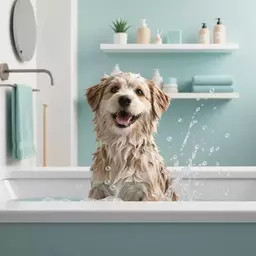
Creating a calm atmosphere can transform bath time from a dreaded chore into a pleasant experience for your dog. Here are some strategies to help ease their anxiety:
- Use warm, comfortable water: Make sure the water temperature is just right—lukewarm is ideal!
- Have everything ready: Gather all your tools beforehand to minimize stress during the process.
- Stay calm and patient: Your demeanor influences your dog's behavior—keep things relaxed!
By setting the stage for a positive bathing experience, you can help your dog feel more at ease. Play some soft music or even talk to them soothingly as you go through the process.
Using Positive Reinforcement Techniques
Associating bath time with positive outcomes can make a world of difference. Here are some effective reward-based techniques to encourage your pup:
- Treats: Offer treats before, during, and after the bath to create a positive association.
- Praise: Use enthusiastic praise and gentle petting to reassure them throughout the process.
- Short sessions: Start with shorter baths to gradually build their comfort level.
Remember, the goal is to make bath time enjoyable! With patience and love, you'll find your dog becomes more relaxed and trusting during their grooming sessions.
Final Thoughts on Mastering Dog Bathing Techniques
Essential Takeaways for Dog Owners
As we wrap up our discussion, it's essential to remember that every dog is unique. Tailoring your grooming practices to fit your dog's specific needs will help them thrive. Regular maintenance, a relaxing bathing environment, and positive reinforcement are key elements in ensuring your pet has a positive bathing experience.
Encouraging Questions and Further Learning
I invite you to share your questions or experiences in the comments below! If you have any specific concerns or tips, let’s keep the conversation going. Together, we can create a supportive community where every dog can enjoy their bath time!
Recap of Key Points
Here is a quick recap of the important points discussed in the article:
- Understand Coat Types: Knowing whether your dog has a smooth, double, wire, or curly coat is essential for tailoring grooming practices.
- Bathing Frequency: Smooth-coated dogs typically need baths every 4-6 weeks, while double-coated breeds may require more frequent grooming to manage shedding.
- Use Appropriate Products: Choose shampoos and conditioners that cater to your dog's specific coat type to ensure optimal health.
- Regular Brushing: Establish a brushing routine to keep your dog's coat clean, minimize shedding, and promote natural oil distribution.
- Create a Positive Bathing Experience: Use warm water, prepare your tools in advance, and employ positive reinforcement techniques to make bath time enjoyable.